

True Faith.
What is true faith. Stephen explains that true faith involves belief and trust and confirms our future in heaven with the Lord.

A Story from Matthew and Luke
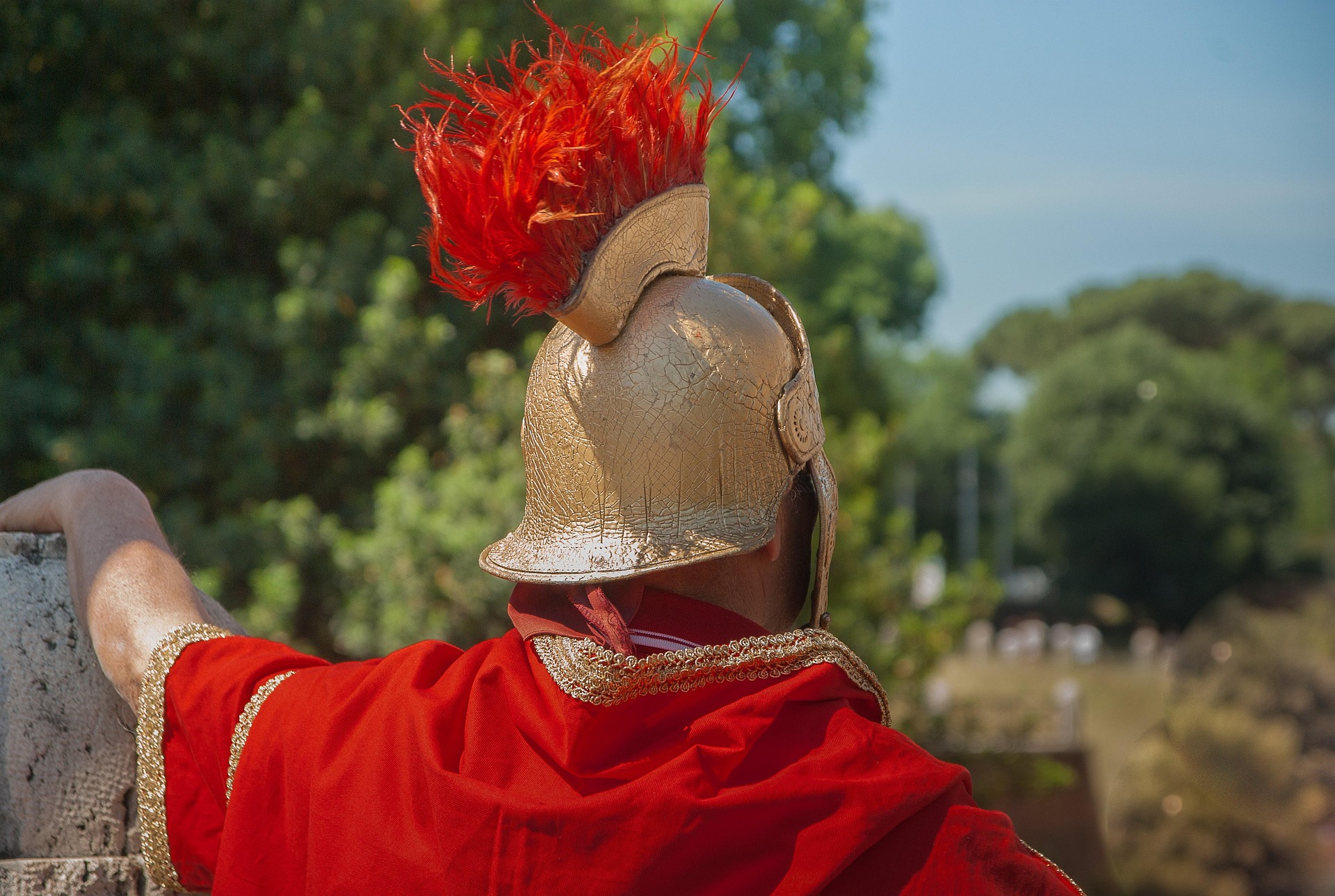
This time on “Stepping Out”, we’re going to look at my favourite story of faith from the New Testament. It may not be the most well-known story from the gospels, but Matthew and Luke both record the account of a Roman Centurion with a servant who had become paralyzed. Let’s read the story as it is found in Matthew 8:5-13
And when Jesus entered Capernaum, a centurion came to Him, imploring Him, and saying, “Lord, my servant is lying paralyzed at home, fearfully tormented.” Jesus said to him, “I will come and heal him.” But the centurion said, “Lord, I am not worthy for You to come under my roof, but just say the word, and my servant will be healed. “For I also am a man under authority, with soldiers under me; and I say to this one, ‘Go!’ and he goes, and to another, ‘Come!’ and he comes, and to my slave, ‘Do this!’ and he does it.” Now when Jesus heard this, He marveled and said to those who were following, “Truly I say to you, I have not found such great faith with anyone in Israel. “I say to you that many will come from east and west, and recline at the table with Abraham, Isaac and Jacob in the kingdom of heaven; but the sons of the kingdom will be cast out into the outer darkness; in that place there will be weeping and gnashing of teeth.” And Jesus said to the centurion, “Go; it shall be done for you as you have believed.” And the servant was healed that very moment. Matthew 8:5-13
Jesus Connects with a Roman Centurion
This event takes place early in Jesus’ ministry, but well enough into it that people who were paying attention had already seen some pretty amazing things from Jesus. In fact, the first four verses of Matthew 8, which we didn’t read, tell how Jesus encountered a man with leprosy, and then reached out and touched the man, curing him of the disease. The placement of this healing is important, because it establishes what would have been the precedent for the miracles of Jesus up to this point in time – contact. So far, Jesus has had some form of contact with every person He has helped, whether it be physical contact, touch, or just being in the same place at the same time, face to face contact.
Now, we have this story of the Roman Centurion. Luke gives us a few more details about him, saying that he a was friend of the nation of Israel, treated the people kindly, and even helped with the building of the synagogue in Capernaum. It also reveals that his servant, was not only paralyzed, but sick to the point of being near death. Luke also says that the servant was very dear, or precious, to the Centurion, another anomaly for the time. Generally speaking, this Roman officer seemed to be a very good person. As we read through the story however, we see that it isn’t his goodness that causes Jesus to marvel, but his faith. And so, we ask, what made his faith so spectacular?
The Centurion’s Servant
Given what we know about the Centurion, how much he cared for his servant, the obvious conclusion is that he truly desired him to be healed. Likely he had exhausted all options with the various doctors and medical professionals of the day, and nothing helped.
Then, here comes this man, Jesus, who is healing and performing miracles. Not only that, but Jesus had just finished delivering the sermon on the mount found in Matthew chapters five through seven, at the end of which the Bible tells us the people were in awe because Jesus spoke as one having real authority, and not just as the religious teachers did.
The Evidence for Jesus, the Son of God
When we put all of this together, there is already more than enough evidence to identify Jesus for who He truly is, the son of God. The problem was that not many people had started making that connection yet. But at least one man had, the Roman Centurion. Now that might seem like a bit of a jump, to say that because this officer asked a man who had performed healings to come and heal his servant it means he recognized Jesus as the Son of God, but it really isn’t.
It’s alluded to in the passage we read. First, the man recognizes Jesus absolute authority over the supernatural, likening it to his own authority in the army over his soldiers. Next, Jesus Himself points out the man’s remarkable faith, stating, “I have not found such great faith with anyone in Israel.” Now there were many people in Israel that believed Jesus could heal them or their friends, but Jesus indicates none of them had faith like this man.
The Healing by Jesus
Consider this; I mentioned that so far, every healing by Jesus up to this point had some form of physical connection between Jesus and the person being restored. It creates almost a mechanism for healing. A person is brought to the Lord, Jesus then touches them or speaks to them, and they are healed. This is a continuous trend in the Bible.
In Matthew 9, we will see a woman who said,
“If I can just touch the hem of His garment I will be healed.” Matthew 9:21
Now, we have this Roman Centurion, who goes and asks Jesus to heal his servant, and Jesus answers, saying, “I will come and heal him.” Most people at this point would say something like, “Thank you Lord, my house is this way.” But not this man. He replies, “Lord, I am not worthy to have you come under my roof, but just say the word and my servant will be healed.” There are a couple things here worthy of pointing out.

A Centurion’s Position
First, in the hierarchy of Roman citizenry, a Centurion would have been much greater and more important than the non-citizen Jews of Galilee. So, for this officer to say to Jesus,
“I am not worthy to have you come under my roof”,
would have shocked a lot of the people that were there. What he is ultimately saying to Jesus is,
“You are so much greater than I am.”
Which makes a lot of sense if he is recognizing the deity of the Lord Jesus Christ. Then, he adds, just say the word and my servant will be healed.
How Much the Centurion Knew
I don’t know how much of this the Centurion knew, today we have the completion of the New Testament and passages like Colossians 1:16 and Hebrews 1:3 which tell us how Jesus was not only present at the creation of the world but was involved personally in the creation of all things.
Having learned from Luke that he was friendly to the Jews, and helped build their synagogue, it wouldn’t be unreasonable to think he was familiar with some of the Jewish religious texts. Perhaps the more famous ones, like the creation story, where everything begins with the statement,
“and God said…”
It is interesting to see the parallel here with the Centurion asking Jesus to
“just say the word and my servant will be healed.”
It was in hearing this that Jesus marvelled at his faith and declared it to those who were there with him.

An Example of True Faith
This is an example of true faith. I sometimes wish that faith was a simple concept that is easy to explain or understand, but the reality is faith is quite nuanced. There are a lot of things that go into it, and the Roman Centurion checked off all the boxes.
I like to illustrate the idea of true faith using the example of a bridge. Think of one of those rickety, rope and plank bridges spanning across a deep ravine. You know, the kind that can only have jagged rocks or crocodiles at the bottom. With even a gentle breeze, the bridge sways back and forth. There is a sign on the bridge, which reads, “This bridge is 100% certified and guaranteed to be able to support your weight and carry you safely to the other side.” That’s the claim.
Now, you could believe the claim but still decide that you are going to look for another way across, even though there is no other way. You might try to make your own way across, but find you can’t, because in order to do so you would need access to the other side. So, even though you believed that the existing bridge was enough, you can’t say you have faith in it. However, if you add trust to your belief, then what happens is that belief and trust come together, producing faith, with results in action, stepping out onto the bridge. And as we continue to cross, another thing happens, confidence starts to build, which then strengthens the faith we had. This is the type of faith that God calls each and every one of us to in the gospel.
All Have Sinned
The Bible tells us that all of us have sinned. That means we have done, said, or even thought things that go against God’s perfect nature. It says that our sin, keeps us separated from God. That’s the chasm or the ravine, God is in heaven, and we can’t get there because we have sinned. The Bible also says that if our sin is not dealt with, then when we die, we will spend eternity being separated from God in a place of torment, sometimes referred to as hell, or the lake of fire.
So, this is a big problem, especially since we also read in the Bible that there is nothing anyone of us can do to pay the price of our sin. That’s the bad news, and it would be exceedingly bad news, if not for the good news that God gives us. God loves every person in His creation so much and doesn’t want anyone to suffer this eternal loss.
However, since God is perfectly righteous and just, sin must be punished, it must be dealt with. Therefore, in the greatest act of love that God could express, He sent His own Son, Jesus Christ, to come to earth, live a perfect life without any sin, and then offer Himself on the cross as a sacrifice, or payment for all the sin of mankind. 1 John 2:2 says,
“He Himself is the propitiation for our sins; and not for ours only, but also for those of the whole world.” John 2:2

Propitiation
That word, propitiation, means complete satisfaction. God was completely satisfied with His Son’s offering for our sin. So now comes the claim of the gospel. That anyone who puts their faith in Jesus will be saved.
That is, anyone who believes that Jesus is the Son of God, who died for our sin and rose again, and trusts that His sacrifice alone is sufficient to cleanse us from sin and give us eternal life, will have the salvation He offers, and will one day be with Him in heaven. Jesus is our bridge, and as we believe in Him and trust Him, we walk with Him and gain more confidence that He will carry us to the other side.
True Faith is Belief and Trust
Again, true faith is when belief and trust come together, resulting in action. The Centurion displayed this immensely. Not only believing that Jesus could heal his servant with a word, but trusting that He would, and so He had the confidence to tell Jesus that He didn’t need to come to His home in order to heal his servant. Can we have such faith in Christ today? Absolutely. If we believe God’s promises, and trust that He can and will keep them, we will find in Jesus the confidence to live in the full assurance of our future with God in heaven.

Do you think the 10 Commandments are still important today? We would love to hear from you. Comment below or contact us at HopeStreamRadio.



Leave a Reply