
The Ultimate Faithfulness.
Abraham demonstrated ultimate faithfulness by obeying God – even when God asked him to do something terrifying. Stephen explains.

The Faithfulness of Abraham
In this installment of “Stepping Out”, we’re going to continue our look into the faith of Abraham in the book of Genesis. Last time, we looked at his faith when he left everything he had, everything he knew, even everything he was, to follow a God he had never known, realizing the blessing being promised was far greater than anything he could imagine. We’ll pick up in Genesis 22, which takes place as many as 50 years after Abraham left the land of Haran.
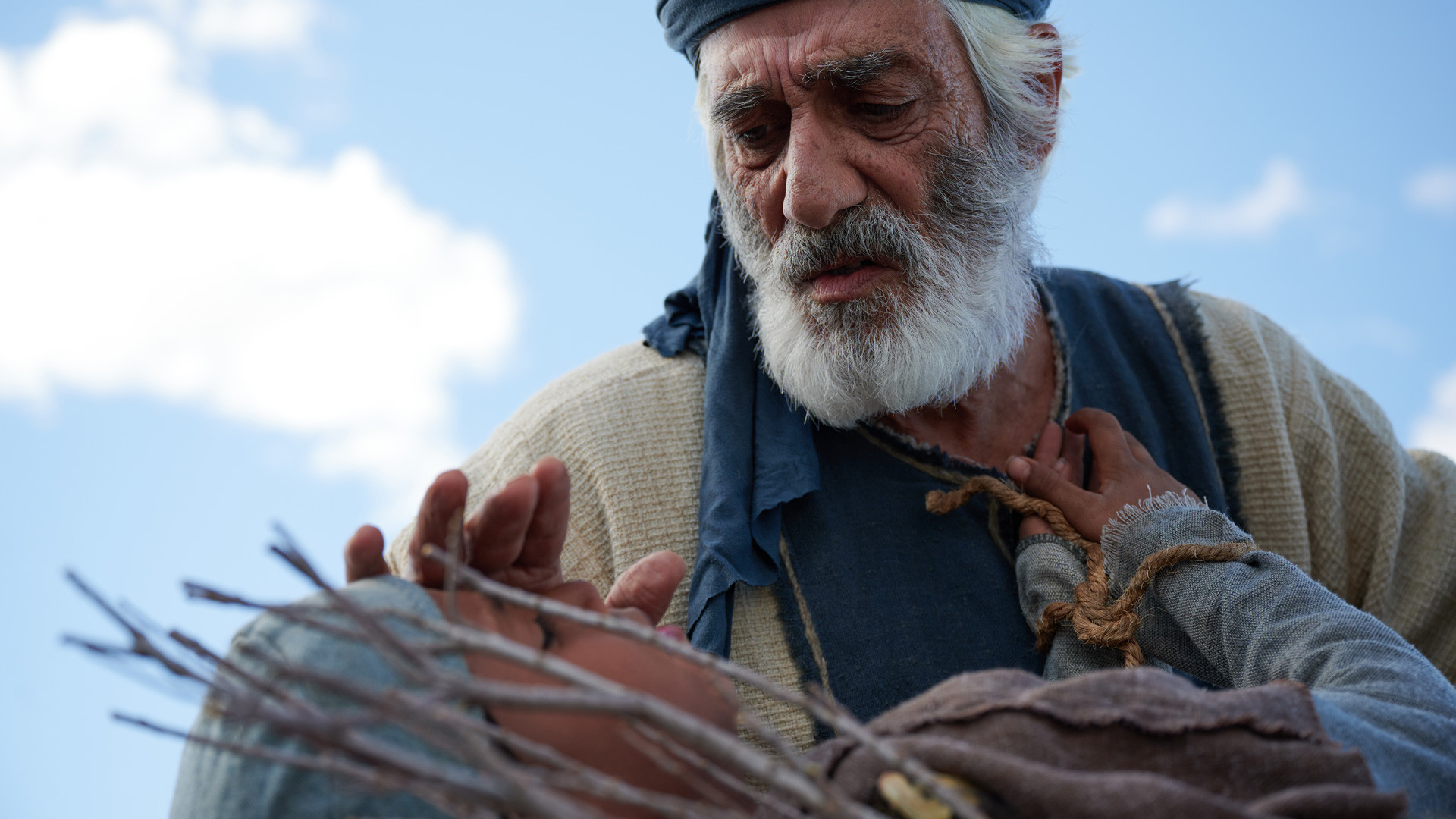
After these things God tested Abraham and said to him, “Abraham!” And he said, “Here I am.” He said, “Take your son, your only son Isaac, whom you love, and go to the land of Moriah, and offer him there as a burnt offering on one of the mountains of which I shall tell you.” So Abraham rose early in the morning, saddled his donkey, and took two of his young men with him, and his son Isaac. And he cut the wood for the burnt offering and arose and went to the place of which God had told him. On the third day Abraham lifted up his eyes and saw the place from afar. Then Abraham said to his young men, “Stay here with the donkey; I and the boy will go over there and worship and come again to you.” And Abraham took the wood of the burnt offering and laid it on Isaac his son. And he took in his hand the fire and the knife. So they went both of them together. And Isaac said to his father Abraham, “My father!” And he said, “Here I am, my son.” He said, “Behold, the fire and the wood, but where is the lamb for a burnt offering?” Abraham said, “God will provide for himself the lamb for a burnt offering, my son.” So they went both of them together. When they came to the place of which God had told him, Abraham built the altar there and laid the wood in order and bound Isaac his son and laid him on the altar, on top of the wood. Then Abraham reached out his hand and took the knife to slaughter his son. But the angel of the LORD called to him from heaven and said, “Abraham, Abraham!” And he said, “Here I am.” He said, “Do not lay your hand on the boy or do anything to him, for now I know that you fear God, seeing you have not withheld your son, your only son, from me.” And Abraham lifted up his eyes and looked, and behold, behind him was a ram, caught in a thicket by his horns. And Abraham went and took the ram and offered it up as a burnt offering instead of his son. So Abraham called the name of that place, “The LORD will provide”; as it is said to this day, “On the mount of the LORD it shall be provided.” And the angel of the LORD called to Abraham a second time from heaven and said, “By myself I have sworn, declares the LORD, because you have done this and have not withheld your son, your only son, I will surely bless you, and I will surely multiply your offspring as the stars of heaven and as the sand that is on the seashore. And your offspring shall possess the gate of his enemies, and in your offspring shall all the nations of the earth be blessed, because you have obeyed my voice.” So Abraham returned to his young men, and they arose and went together to Beersheba. And Abraham lived at Beersheba. Genesis 22:1-19
A Lot of Difficult Questions
On the first read through, this passage can leave us with a lot of difficult questions about the nature of God. I’d like to deal with those first.
We read that God is testing Abraham and asking him to sacrifice his son Isaac. This does not seem consistent with what we know about God. That He is loving, just, merciful, and in a word, good. How can a good God, ask Abraham to show his faith by killing his son? Especially when we consider the Ten Commandments, which were to later be given by God to Moses, the sixth of which states, “You shall not commit murder.”
God would also in the Law forbid human sacrifice, so I can’t even try to reason that this action on the part of Abraham would be excluded from being murder, even if it was, human sacrifice, according to the book of Deuteronomy, was an abomination.
Reconciling God’s Words With Scripture
So how do we reconcile this? Let’s turn our attention to two portions of Scripture, that show us some of the divine attributes of God and help us to work our way through this dilemma. The first is in Isaiah, chapter 46, verses nine and ten, there we read,
“Remember the former things of old; for I am God, and there is no other; I am God, and there is none like me, declaring the end from the beginning and from ancient times things not yet done, saying, ‘My counsel shall stand, and I will accomplish all my purpose,’” Isaiah 46:9-10
The other comes from Psalm 139:1-4,
“O LORD, you have searched me and known me! You know when I sit down and when I rise up; you discern my thoughts from afar. You search out my path and my lying down and are acquainted with all my ways. Even before a word is on my tongue, behold, O LORD, you know it altogether.” Psalm 139:1-4
These two verses confirm something about God that is critical to our understanding of what is happening here in Genesis 22. First, Isaiah speaks of God’s perfect foreknowledge. He knows the future. Second, Psalms tells us of God’s perfect knowledge of man, right down to our very thoughts.

Two Important Truths
If we apply this to what we just read in Genesis, we can draw two very important truths from it. One, God knew, even before Abraham did, that Abraham would act in faith and obedience. Two, God knew, even before Abraham had made any decision, that no harm was to come to Isaac on that mountain. The test, therefore, existed in the fact that while God knew this, he had withheld it from Abraham.
You see, Abraham was not being tested for God’s sake. What could God learn from Abraham’s response that He did not already know? This test was for Abraham’s sake, and by design, to provide further blessing to Abraham.
Consider Faith
So, let’s consider Abraham’s faith here. A bit of background information on the years that have passed. Abraham was promised by God that he would be the father of a great nation, and that in him all the families of the earth would be blessed. But he did not have any descendants of his own at that time that would be the fulfillment of the promise, so, he waited. After 25 years of waiting, God blessed Abraham and Sarah with a Son, Isaac. And life went on.
Abraham certainly had been blessed, he was wealthy, strong, and there are portions of genesis that reveal he was very well respected among the people of the land. By the time we get to this event, the offering of Isaac, it is believed that Isaac is somewhere between 18 and 25 years old, still unmarried, with no children of his own to carry on the promise made to Abraham. So, when God calls Abraham to sacrifice Isaac, it would, barring a miracle, seem to be the end of the promise. Still, Abaraham obeys, showing an incredible faith.
Where Does Abraham’s Faithfulness Come From?
Thinking about what Abraham was asked to do, and his obedience, we may ask where such faith can come from. Look at Abraham’s answer to Isaac when he is asked about the animal for the offering, in Genesis 22:7, he says,
“The Lord will provide for Himself a lamb for the burnt offering.”
In Hebrews 11, the author speaks of this event giving another reason, where we can read in verse 19,
“He (Abraham) considered that God was able even to raise him from the dead, from which, figuratively speaking, he did receive him back.” Hebrews 11:19
Abraham’s great faith here was built upon these two elements: God’s past provision, and His future promises. Abraham could look back and consider everything that God had done to provide for him, even the birth of Isaac himself, in an impossible situation, and based on that retrospective look into God’s nature and history, simply claim to Isaac, “God will provide a lamb”.
Likewise, He could consider the promise that God had made concerning his future, and that of his children, which included Isaac specifically being named as the son of the promise, and he could know that even if he did have to go through with this offering, that God would give Isaac back to him, even from the dead through resurrection.
Past Provision and Future Promises
These two principles, God’s past provision and His future promises, are the exact same principles we can look to today to strengthen our own faith. Hebrews 10:23 says
“Let us hold fast the confession of our hope without wavering, for He who promised is faithful.” Hebrews 10:23
If you are a believer in Jesus Christ, we can look at all the promises we have from God concerning our future and know for certain that those promises will be kept, simply on the basis that it was God who made the promises. This is a great comfort to us. As believers in Jesus, we will be with him in heaven one day. Now, the inverse of that promise is true also. If you are not a believer in Christ, you will not be in heaven when your time on earth is done.
John 3:36 says very clearly that whoever believes in Jesus has eternal life, and whoever does not believe shall not see life, because the wrath of God remains on them. That is the major aspect of God’s past provision to us today. That though we were dead in our sins, enemies of God because of our sin, God provided a way in the Lord Jesus Christ that our sins could be forgiven, and we could have eternal life with Him in heaven. The passage in Genesis is painting a near perfect picture of that.
The Lord Will Provide
Abraham said, “the Lord will provide for Himself a lamb.” Remember how I said at the start that God, who could see everything in the future knew that no harm would come to Isaac on this mountain. That’s because God, knowing the future, knew that there was another Son, another mountain, where the Lamb of God who takes away the sin of the world would die for the sin of all mankind.
It was on that mountain, which was possibly even visible from where Abraham and Isaac were, that Jesus carried his own cross, just as Isaac had carried the wood, and like Isaac, He willingly allowed himself to bound and prepared for death. Only this time, there was no intervention. No last-minute clemency, no sparing of the beloved Son. Instead, the full wrath of God against sin was poured out on the Lord Jesus. He didn’t need to be saved, because He was the one doing the saving.
Trust in Jesus
This is what God has done for you. If you have not trusted in Jesus, please understand there is no other way to be freed from sin, no other way to enter into a relationship with God and have eternal life with Him in heaven. If you do not believe that Jesus is the Son of God and that He died for your sins, then you will be left to perish for your own sin, eternally separated from the loving God, who is the giver of all good things.
If you have trusted in Him, reflect on what He has done for you often. Knowing that with the promise of salvation and heaven, he has also promised to be with us always, to help us and comfort us through the trials we face in this life.
Sometimes we can be distracted by the events of our life and not see Him at work or feel His presence with us. That’s when we need to be like Abraham and remember His past provision and His future promises to us, so that our faith will be strengthened, knowing that as Romans 8:32 says
“He who did not spare His own Son, but gave Him up for us all, how will He not also with Him graciously give us all things.” Romans 8:32
Comforted by the truth that God always keeps His promises.
I’ve titled this episode, “The Ultimate Faithfulness”; not because of what Abraham did, but because in this passage in Genesis 22, we see a clear picture of God’s ultimate faithfulness to mankind.

Is it possible to have “ultimate faithfulness like Abraham?” What’s preventing you? We would love to hear from you. Comment below or contact us at HopeStreamRadio.



Leave a Reply