
Rest – The Purpose of the Sabbath.
The Sabbath is well known in Jewish circles. But what does it mean for Christians? Stephen March explains the fourth commandment.

The Fourth Commandment
We come now to the fourth commandment, and the last of the ten that are God centred. Once again, this is a commandment that has a lot of different ideas about it today, and is sometimes difficult to understand as far as how it is applicable for us. Here is the commandment, found in Exodus 20:8,
“Remember the Sabbath day, to keep it holy. Six days you shall labour, and do all your work, but the seventh day is a Sabbath to the Lord your God. On it, you shall not do any work, you or your son, or your daughter, your male servant or your female servant, or your livestock, or the sojourner who is within your gates. For in six days the Lord made heaven and earth, the sea, and all that is in them, and rested on the seventh day. Therefore the Lord blessed the Sabbath day and made it holy.”
The Meaning of the Sabbath
So let’s start with the actual word “Sabbath”, what does it mean? According to Strong’s concordance, the word means “intermission” and is derived from a root word that can have many similar meanings, such as to desist, cease, or simply, rest. It is actually that root word that was used in Genesis 2, where we read that God rested on the seventh day, after the creation of the world. The word we translate as rest was the Hebrew word, “shabath” (shaw-bath), which is where we get the word Sabbath.
God Doesn’t Get Tired
For clarification, this day of rest has nothing much to do with fatigue, God doesn’t get tired, or worn out like we do. When God rested on the seventh day, it wasn’t because he needed to recharge, the passage in Genesis really means, he stopped, he ceased the creative work. God never stops working, in some sense. Jesus even said so in John 5:17, after being questioned, or as scripture puts it, being persecuted, for healing people on the Sabbath day, Jesus answered “My Father is working until now, and I am working.” Keep this statement in mind because we’ll see how important a statement it is about Jesus’ true identity in just a moment.
Who Was the Sabbath For?
Getting back to the Sabbath, the next thing we need to look at is who the Sabbath was for. On one level, it was for the children of Israel. After Moses received the ten commandments in Exodus 20, God proceeds to give him more instruction concerning the building of the tabernacle. After that, God gives Moses what some Bibles give the subheading “The sign of the Sabbath” in Exodus 31. This is what the Bible says in Exodus 31:16,
“Therefore the people of Israel shall keep the Sabbath, observing the Sabbath throughout their generations, as a covenant forever. It is a sign forever between me and the people of Israel that in six days the Lord made heaven and earth, and on the seventh day He rested and was refreshed.”
The Observation of the Sabbath
The observation of the Sabbath was for the descendants of Jacob, the Israelites. It wasn’t for the Gentiles, and it wasn’t for God. It was to be a sign, a reminder of God’s power in creation, but more than that, in verse 16 God refers to it as a covenant, it is a weekly reminder, and observance of God’s promise to Israel. More about the Sabbath’s meaning and purpose is revealed later on as well, in Deuteronomy 5 when Moses gives the ten commandments again, instead of mentioning creation, He instead says this, in verse 15
“You shall remember that you were a slave in the land of Egypt, and the Lord your God brought you out from there with a mighty hand and an outstretched arm. Therefore the Lord your God commanded you to keep the Sabbath day.”
So the Sabbath is a reminder of God’s power and completion of the creative work, and the reason for commanding the observance of the Sabbath was because God by that same power had completed the deliverance of Israel from Egypt. And this imagery is important when we look at events of the New Testament, and the impact this commandment has on the church today.

Observance of the Sabbath
Before we get to that though, one last thing on the Sabbath, which deals with its observance. As mentioned many times already, the Sabbath was to be a day of rest, an intermission from the busyness of life, and to set that day apart for the Lord, for remembering Him. And there was a special gathering, a holy convocation as Leviticus 23 puts it, and the keeping of the Sabbath was an act of worship, however, the Sabbath was not a day set apart for the purpose of worship.
The Bible is very clear throughout that God is to be worshipped at all times, every day, in everything we do. Romans 12:1 states
“I appeal to you therefore, brothers, by the mercies of God, to present your bodies as a living sacrifice, holy and acceptable to God, which is your spiritual worship.”
If you are alive today, surrender yourself to God as an act of worship, if you’re alive tomorrow, surrender yourself to God as an act of worship. Worship is, and was back then too, continual, it was never to stop. Hebrews reminds us that every priest stood daily at his service, offering repeatedly the same sacrifices, worship was continuous, it didn’t start on the Sabbath and then stop again on the first of the week. It was ongoing, the Sabbath offered a tie for a different style of worship, and perhaps more than that, it was created for man, to give a unique blessing.
What About the Christian?
So all this then is good for the Israelite, or the follower of Judaism, but what about for the Christian today? This question generates a lot of misunderstanding. First of all, a reminder that reading through the book or Romans makes it very clear that believers are not under the law, but under grace. The law no longer has any authority over us. But before we get too excited about Christian liberties and freedom in Christ, remember also that the moral law, particularly the ten commandments, provide for us some of the best insight into how our heavenly Father desires us to live godly lives. If we are living for God, we will do what is found in these commandments.
Sunday Is Not the Sabbath
Another question that sometimes goes along with this, is whether Sunday is the Christian Sabbath? The answer to that is no, it isn’t. Though the practise of Christians gathering on the first of the week shares a lot similarities, there is no Biblical evidence that God has replaced the Sabbath, or declared the first of the week to be a new Sabbath. The Sabbath, as described in the Old Testament is the seventh day, and is a sign of the promise between God and the people of Israel, that hasn’t changed. To get a little more clarity on the Sabbath for the Christian, let’s look at some of Paul’s writings, in Romans and Colossians.
First, Romans 14:5 says,
“One person esteems one day as better than another, while another esteems all days alike. Each one should be fully convicted in his own mind. The one who observes the day observes it in honour of the Lord. The one who eats (speaking of dietary laws that were mentioned earlier in the passage), eats in honour of the Lord, since he gives thanks to God, while the one who abstains, abstains in honour of the Lord, and gives thanks to God.”
Freedom in Christ
This passage brings the observance of the Sabbath directly into the territory of our freedom in Christ. If you feel convicted that you should observe it, then do so, as unto the Lord, if you feel convicted that under the new covenant in Christ we are not bound to observe the Sabbath than don’t, giving thanks for that freedom in Christ. The biggest thing to remember is that whatever our conviction, we don’t pass judgment on those who practise differently.
Remember, our righteousness is found in Christ alone, not through the observance of the law, Romans 3:20-21 reminds us of this,
“For by works of the law no human being will be justified in his sight, since through the law comes the knowledge of sin. But now, the righteousness of God has been manifested apart from the Law, although the Law and the Prophets bear witness to it – the righteousness of God through faith in Jesus Christ for all who believe.”
This brings us to our passage in Colossians 2:16-17
“Therefore let no one pass judgment on you in questions of food and drink, or with regard to a festival or a new moon or a Sabbath. These are a shadow of the things to come, but the substance belongs to Christ.”
A Shadow of Jesus
The whole Law, including the Sabbath, was just a shadow of the fulfillment, or the reality that was coming which was Jesus. Remember when Jesus said “My father is working until now and so am I?” It goes along with what he says in Mark 2:28 “So the Son of Man is lord, even of the Sabbath.” Jesus was declaring His authority over the Sabbath, because it was really just a picture of himself. It was a sign of the promise between God and Israel, a promise that culminated with the coming of Messiah, the Lord Jesus Christ. He even said “Come to me all who labour and are heavy laden, and I will give you rest. Take my yoke upon you, and learn from me, for I am gentle and lowly in heart, and you will find rest for your souls.” What is the Christian Sabbath? It’s Jesus.
The Lord’s Supper
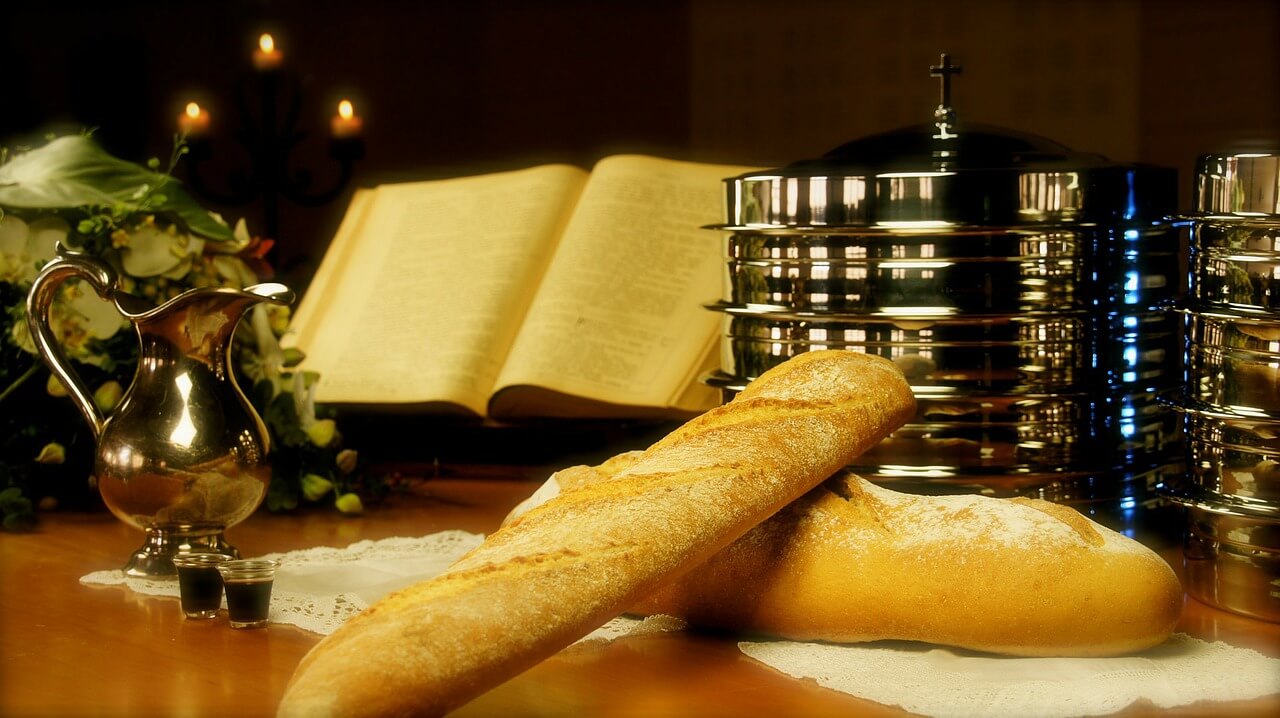
Now, I do want to reiterate that while it is true that as believers in Christ we are dead to the law through his atoning sacrifice on the cross. That does not however, in any way, excuse us from the moral and spiritual implications of the law. In fact, as Christians we have a deeper calling to live morally pure and holy lives. So let’s bring that back to the Sabbath. So far, the first three commandments have had very practical applications for the believer, and I do believe that God has preserved the spiritual emphasis of the Sabbath for the Christian, in the observance of the Lord’s Supper.
The Sabbath was a reminder of God’s completed work of creation, a sign of His promise to Israel, instituted on the deliverance of His people from the land of Egypt. It was a time for them to be called out from the busyness and distractions of daily life and remember their God, for which, the Lord had reserved a special blessing.
The Lord’s Supper is a reminder of Christs completed work of salvation, a sign of the new covenant, the new promise in His blood, instituted when He delivers man from his sin. It is a time for us to be called out from the busyness and distractions of daily life, and remember The Lord Jesus Christ in His death and resurrection, which carries with it a very special blessing.

Do you think the 10 Commandments are still important today? We would love to hear from you. Comment below or contact us at HopeStreamRadio.



Leave a Reply