

Abraham in Egypt.
Abraham demonstrated great faith in obeying God by traveling to an unknown destination. Now we find Abraham in Egypt during a famine.
A Divine Test
After demonstrating remarkable faith by obeying God and leaving his homeland to journey to a land that God would show him, Abraham faces a difficult decision. It will not be the only time that he faces a test of his faith. Like Abraham, we can expect to face many tests during our lifetimes. As Chuck Swindoll says,
You can expect more than one divine test in your own faith journey, but God doesn’t use difficult circumstances to find out what we’ll do. He doesn’t test us to observe our response of faith. He already knows us better than we know ourselves, and He already knows what the future holds. He uses tests to reveal us to ourselves!
Charles R. Swindoll
Calling Upon The Lord
After Abraham’s arrival in Canaan the Lord reiterated and clarified His promise to indicate that this is the land that He had promised to show Abram. He appeared to Abraham and said,
To your descendants I will give this land.
Genesis 12:7
Abraham then traveled deeper into the land and arrived at a site with Bethel on the left and Ai on the right and builds another altar.
Here he “called upon the name of the Lord.”
This is an interesting phrase that we first find in Genesis 4:26
To Seth also a son was born; and he named him Enosh. Then people began to call upon the name of the Lord.
Genesis 4:26
It seems men that, even in the earliest times, mankind recognized their frailty and their need, and despite the sin of others, like Cain, some began to worship the Lord, Yahweh. God has always had His worshippers. Abraham, the man of faith, was now counted among them.
All appears to be going well until nature intervenes with a dilemma for Abraham and his family.

Famine in the Land – Abraham in Egypt
Some time after arriving in Canaan, a famine hits the land. Abraham’s faith is about to be severely tested.
Let’s recap Abraham’s faith up to this point:
- Abraham has had faith to believe God and leave Ur.
- Abraham has had his faith rewarded by a promise that God would give this land to his descendants.
Nevertheless, when the famine hits, Abraham’s faith runs out and he begins to depend on his own abilities, making mistakes along the way before he eventually returns to Canaan and renewed blessing.
He makes the decision to leave the land that God has shown him and heads for Egypt.
Abraham Goes Down to Egypt
I don’t usually draw a lot of attention to phrases like “went down to Egypt” and draw spiritual conclusions from them. But here F.B.Meyer deems it appropriate to do so.
In the figurative language of Scripture, Egypt stands for an alliance with the world…(Abraham) acted simply on his own judgement. He looked at his difficulties and became paralyzed with fear. He grasped at the first means of deliverance that suggested itself, much as a drowning man will catch at a straw. And thus, without taking counsel of his heavenly Protector, Abraham went down to Egypt.
F.B.Meyer
Abraham, who had been on a spiritual high in Canaan, building an altar, worshiping God, being blessed by God, takes matters into his own hands and goes down to Egypt looking for sustenance when there is a famine in the Negev.
Before we think too harshly of Abraham, let’s ponder what we would do if there was a severe famine in our homeland. Where would we go? What would we do to feed our families?
Abraham, the Economic Migrant
If Abraham had lived in our times, we would have called him an economic migrant. Today 44 million people stand on the brink of hunger. Those that can, find their way to countries with better prospects, just as Abraham was attempting to do.
Abraham in Egypt becomes an economic migrant. He finds himself in a desert area without food and heads for the most likely port in the storm – Egypt.
Reports of Egyptian border officials show that it had long been customary to grant refuge to Asiatics who came seeking relief from famine.
Meredith G. Kline
It is no surprise then that, out of fear, Abraham leaves the land that has been promised to his descendants and heads to a place not unlike the homeland he has left behind in Mesopotamia.
A Dangerous Lie
The Egyptians worshiped multiple gods and were a powerful, wealthy, but cruel people. Their penchant for cruelty is what gets Abraham thinking as they journey down to Egypt.
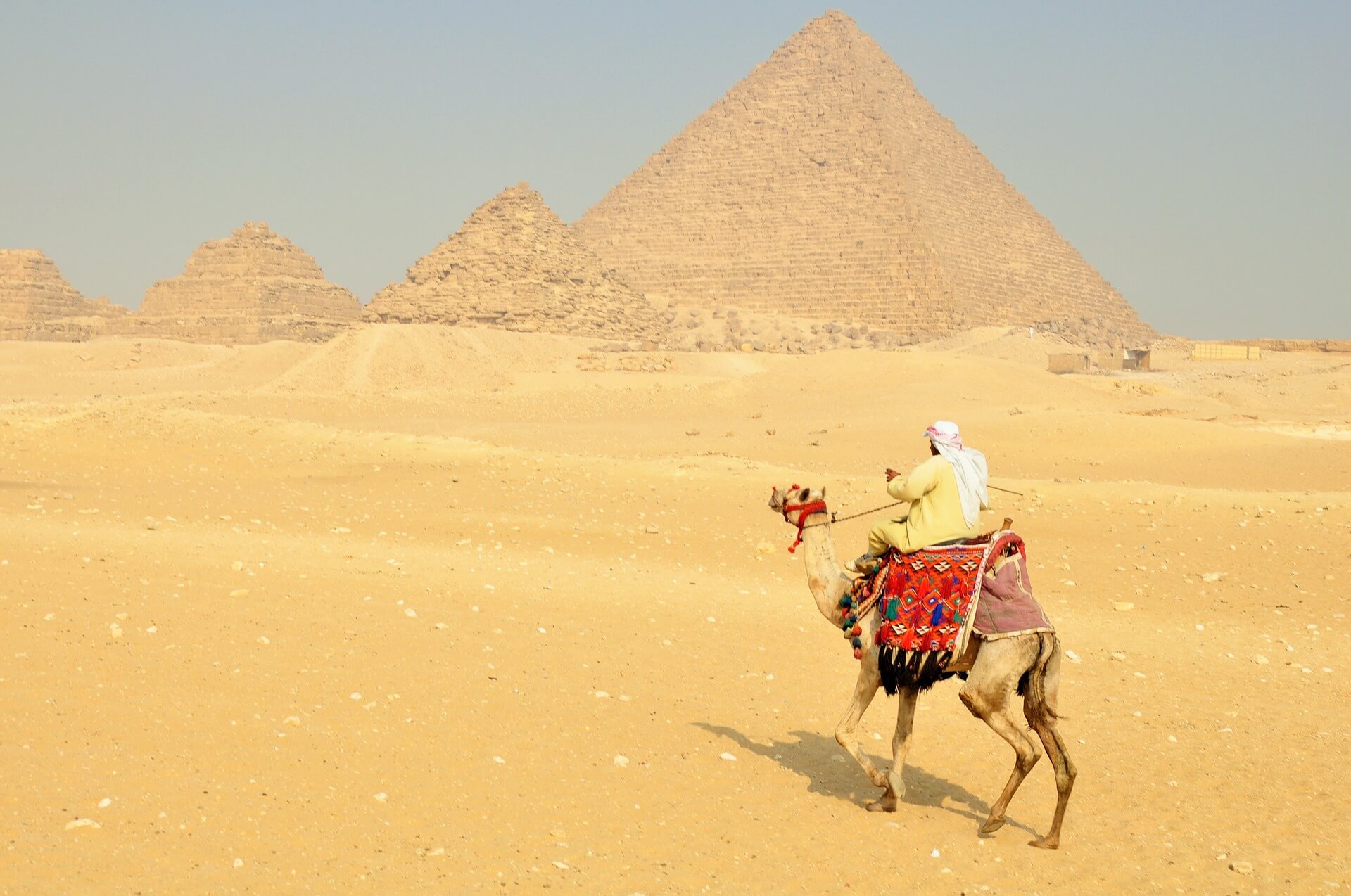
As Abraham and Sarah wend their way to Egypt they concoct a scheme, or at least, Abram does. As they approach the fertile land of palm trees, Pharaoh’s and pyramids Abram asks Sarai to lie for him. To put it bluntly, he wants her to save his bacon!
I know what a beautiful woman you are. When the Egyptians see you, they will say, ‘This is his wife.’ Then they will kill me but will let you live. Say you are my sister, so that I will be treated well for your sake and my life will be spared because of you.
Genesis 12:11-12
Technically what Abraham was asking Sarah to do was at least partially true.
As Abram later told Abimelek when, astonishingly, he repeated the same lie in Genesis 20,
Besides, she really is my sister, the daughter of my father though not of my mother; and she became my wife.
Genesis 20:12
Although marriage to a half-sister shocks us today, we must remember that Abraham lived in a time before the Mosaic Law had been given. So, to save his skin, Abraham asks Sarah to tell this half truth.
We too, are often prone to lying when we feel that we find ourselves in difficult situations. When we feel threatened, when we feel cornered, we resort to copying the lies of our enemy and adversary, the Great Deceiver, Satan.
However, no good can ever come of copying Satan.
As Sir Walter Scott once said:
Oh, what a tangled web we weave, when first we practice to deceive!
Sir Walter Scott
No good can come from lies, as we are about to observe. Abraham, who because of his faith in God had journeyed from his homeland to an unknown land, has now set aside his faith in God and is putting his faith in lies!
Faith in a Lie
Faith in lies is the opposite of faith in God. Faith in lies, is faith in the Father of Lies.
Let’s not mistake what is going on here. Abram’s fear is very real. He has a right to be afraid. He is married to a beautiful woman. Sarai may have been in her forties at this point, but the scripture makes it clear that she was beautiful and potentially attractive to suitors in Egypt.
Abram was wise enough to the ways of the world to know that he might be taken out of the picture by a competing male who was strong enough, wealthy enough and powerful enough to take what he wanted.
But let’s think this through. Abram was putting his wife’s virtue in potential danger to save his life! He was prepared to allow his wife to be put on display and made available to a potential suitor, so that he could live!
Sarai in Pharaoh’s House
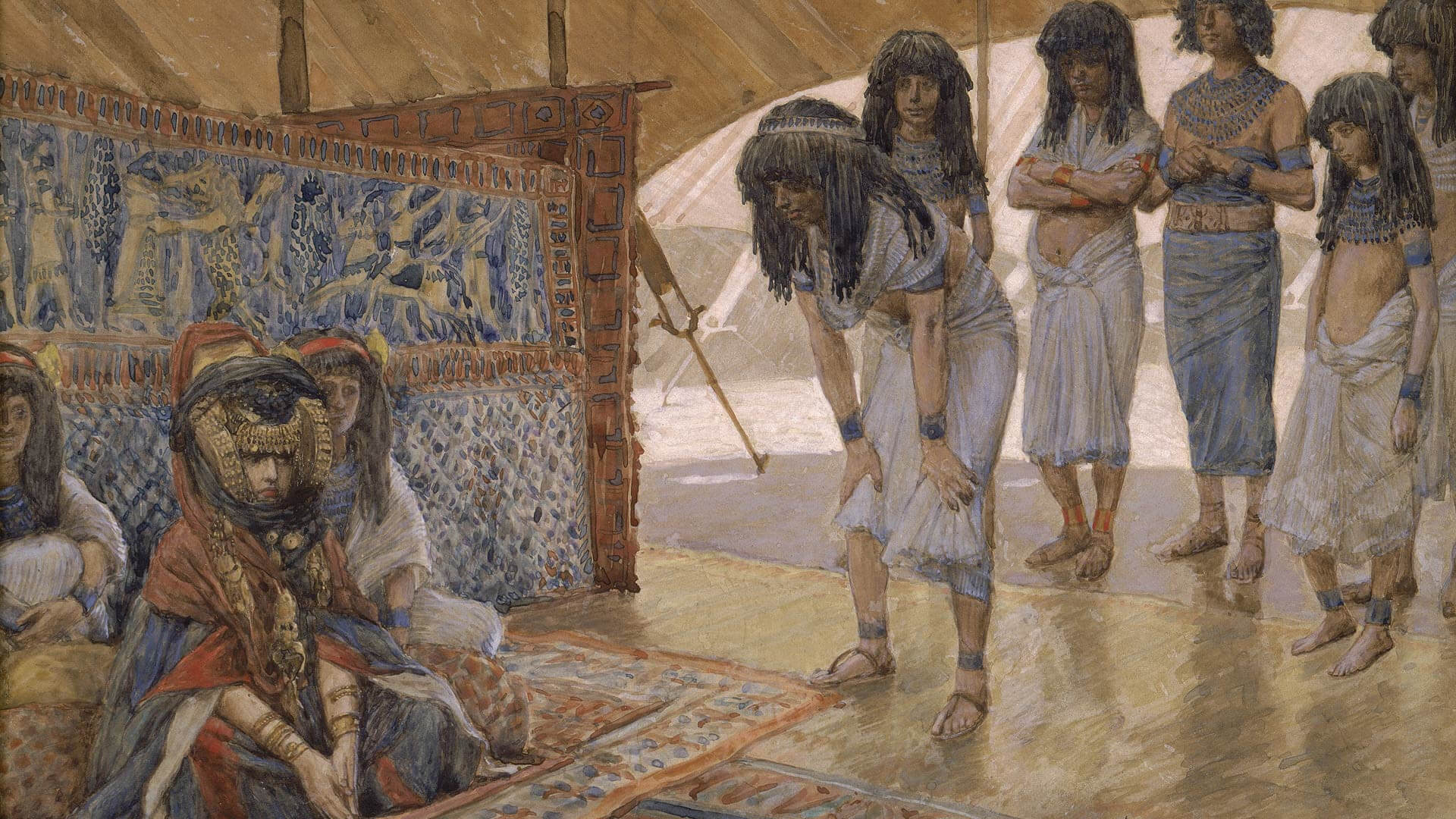
Unsurprisingly, Sarai becomes an object of attraction. We can imagine the stares; the Egyptian version of the wolf whistle. Then she is taken into Pharaoh’s house.
We can imagine Sarai’s fear as she realizes what a difficult position her husband’s cowardice has put her in. She is facing an uncertain future because of her husband’s lack of faith in God.
Does she feel like a piece of property to be bartered and traded? Probably. She is essentially a slave, a concubine in the palace with few rights of her own.
Meanwhile, Abraham is living it up outside the palace counting his wealth as Pharaoh sends him sheep, oxen, donkeys, camels and male and female servants! Pharaoh is quite clearly in the process of paying a bride price for Sarah, without knowing that she is already married. Thankfully, time was on her side, at least in the short term.
Fortunately, ancient marriage rituals included a waiting period long enough to ensure that a bride wasn’t already pregnant. So, Sarai lived inside the palace but was isolated from sexual contact by anyone, including the king.
Chuck Swindoll
In addition, Sarah, although she perhaps may not have known it yet, had a friend in much higher places than the palace of Pharaoh.
What we see next is that the Lord God was prepared to step in and protect Sarai’s virtue, even if Abraham was not.
The Lord had established a covenant with Abraham and in His role as the Covenant Protector, He was not about to allow Abraham’s weakness to destroy His plan for the descendants of Israel. We now know, with the benefit of hindsight that Jesus can trace His ancestry back to Abraham – and Sarah.
God had to step in to protect Sarah’s virtue and to protect the Messianic line.
A Pharaoh, A Plague, Sarah Protected, and the Covenant Preserved.
The Lord intervenes in a remarkable way to rescue Sarai from her dilemma by inflicting Pharaoh and his house with great plagues. Pharaoh probably realizes that Sarah is the problem because she is the only one that is not stricken with the plagues.
As a result, Abraham is rebuked by Pharaoh:
What have you done to me?” he said. “Why didn’t you tell me she was your wife? Why did you say, ‘She is my sister,’ so that I took her to be my wife? Now then, here is your wife. Take her and go!
Genesis 12:18-19
Sarah’s virtue is preserved. The covenant is preserved. Abraham is rebuked.
Pharaoh, who did not know the true God, knew that Abraham had put him in a dangerous position. Remarkably, we find that Abraham is rebuked by someone who was not a worshipper of the true God.
A Well Deserved Rebuke For Abraham in Egypt
How many times have we been rebuked for our behaviour by someone who was not a believer? It is deeply embarrassing when this happens.

I recall an occasion a few years ago when I drove past a schoolyard at a speed well in excess of the limit. An angry driver caught up with me at a traffic light, got out of his car and tore a strip off me. I was too embarrassed to even look him in the eye. What a poor testimony! Abraham’s lack of faith had caused him to be a poor witness for the God of Creation.
So we need to think of our testimony to an unbelieving world. Gentlemen, we need to ask ourselves these questions:
- Do I always put my wife’s needs ahead of mine?
- Do I always defend my wife’s honor and virtue?
- Do I always treat her as an equal in the marriage?
We are given a great responsibility when God blesses us with a wife. She is not a chattel. She is not an object. We should never involve her in our wicked schemes.
She is a partner, given to us by God to be our life partner and helper.
It is not good for the man to be alone. I will make a helper suitable for him.
Genesis 2:18 (NIV)
But here Abraham has twisted this great plan of God by trying to convince Sarai that she would be helping him by going along with his lie. Abraham deserves his rebuke.
God is Committed to His People and His Promises
Although Abraham has failed this test of his faith, all is not lost. God is faithful and when we have wandered from God there is always a way back. God is merciful, gracious and forgiving.
It wasn’t the act of searching for food in food that was Abraham’s mistake, it was failing to trust God who had brought him to Canaan, and then resorting to lies to protect himself. In the next post in the series we will see that when Abraham returns to Canaan God reiterates and expands on His original promise.

Have you experienced a dramatic life-changing event like Abraham did? We would love to hear from you. Comment below or contact us at HopeStreamRadio.



Leave a Reply