

Cain and Abel – A Tale of Two Brothers.
Cain and Abel are today’s key characters as Stephen continues his series by posing the question, “When is faith not really faith?”
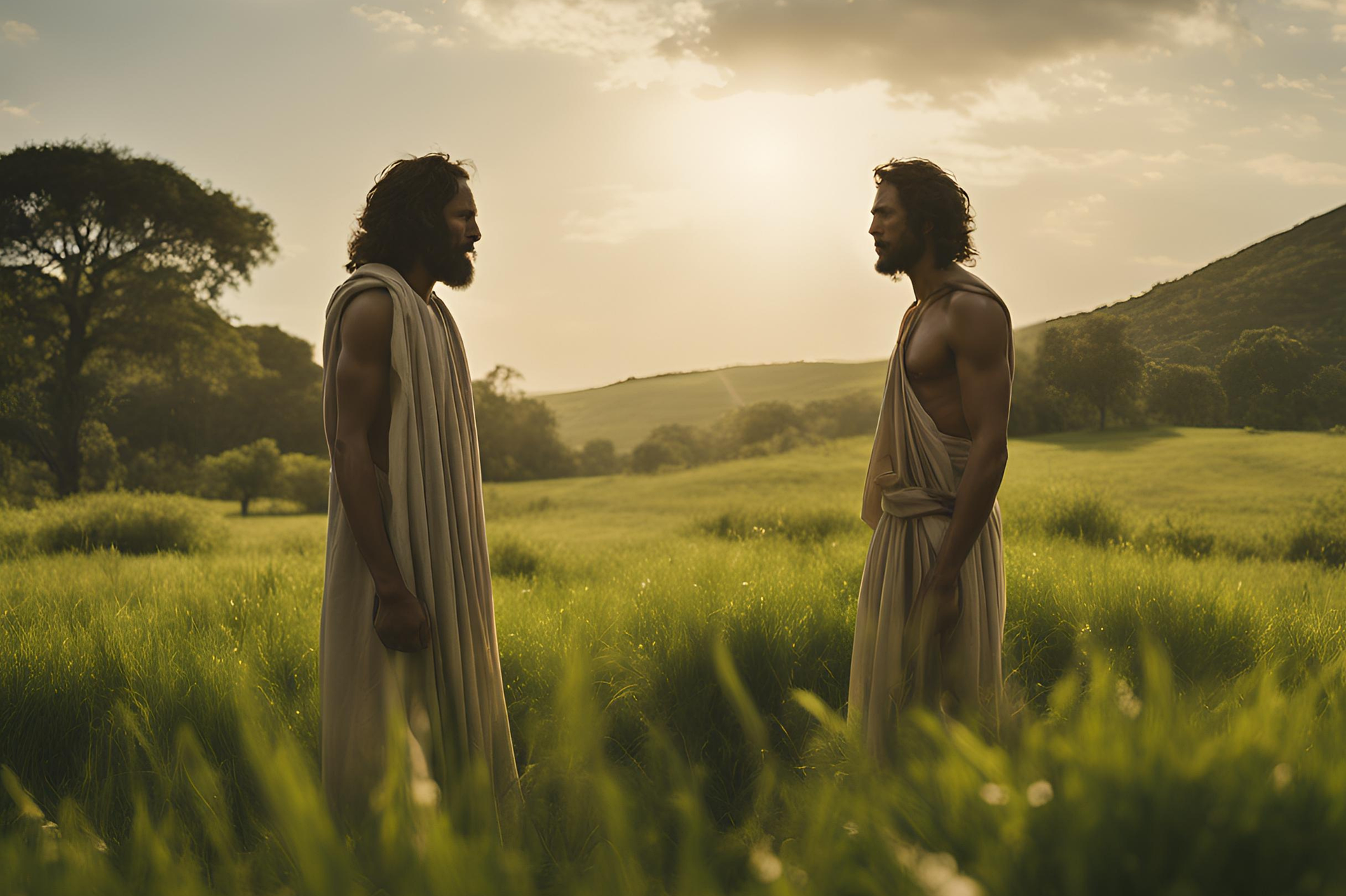
Faith That is Not Faith
When is faith not really faith? When it is looked upon merely as a means to an end. That will be one of the focus points in this installment of “Stepping Out”, as we look at two opposing faiths from the earliest days of humanity. In Genesis chapter 4, we find the story of brothers, Cain and Abel. Here is how that story goes.
Now Adam knew Eve his wife, and she conceived and bore Cain, saying, “I have gotten a man with the help of the LORD.” And again, she bore his brother Abel. Now Abel was a keeper of sheep, and Cain a worker of the ground. In the course of time Cain brought to the LORD an offering of the fruit of the ground, and Abel also brought of the firstborn of his flock and of their fat portions. And the LORD had regard for Abel and his offering, but for Cain and his offering he had no regard. So Cain was very angry, and his face fell. The LORD said to Cain, “Why are you angry, and why has your face fallen? If you do well, will you not be accepted? And if you do not do well, sin is crouching at the door. Its desire is contrary to you, but you must rule over it.” Cain spoke to Abel his brother. And when they were in the field, Cain rose up against his brother Abel and killed him. Then the LORD said to Cain, “Where is Abel your brother?” He said, “I do not know; am I my brother’s keeper?” And the LORD said, “What have you done? The voice of your brother’s blood is crying to me from the ground. And now you are cursed from the ground, which has opened its mouth to receive your brother’s blood from your hand. When you work the ground, it shall no longer yield to you its strength. You shall be a fugitive and a wanderer on the earth.” Cain said to the LORD, “My punishment is greater than I can bear. Behold, you have driven me today away from the ground, and from your face I shall be hidden. I shall be a fugitive and a wanderer on the earth, and whoever finds me will kill me.” Then the LORD said to him, “Not so! If anyone kills Cain, vengeance shall be taken on him sevenfold.” And the LORD put a mark on Cain, lest any who found him should attack him. Then Cain went away from the presence of the LORD and settled in the land of Nod, east of Eden. Genesis 4:1-16
Cain and Abel’s Faith
Cain and Abel’s individual faiths were not opposed in that they believed in different gods, we see from this story they did both in fact know the one true God. They differed in how they viewed, treated and respected God in their hearts. For these two brothers, faith looked a little different than it does for you and me today.
We are asked to believe in a God, and in a Saviour, Jesus Christ, that we have never seen or had a physical interaction with. Peter puts this type of faith best in his first letter, chapter 1 verse 8 where he writes, “Though you have not seen Him, you love Him. Though you do not now see Him, you believe in Him and rejoice with joy that is inexpressible and filled with glory.”
Cain and Abel’s Advantage
Cain and Abel were different. First of all, their parents had direct contact with God, we see in Genesis 2 that God spoke with them, and in chapter 3 He walked in the Garden with them, they could hear Him and even tried to hide from His presence.
Second, we see in Genesis 4 that at least Cain had direct communication with God, as we can read the conversation he had with Him. Therefore, Cain and Abel didn’t need to believe in God insomuch as they knew He existed. Faithfulness for them was founded more in trust and reverence for God. That is where the faith of these two brothers stood miles apart.

Offerings
We read in Genesis 4 that both Cain and Abel made an offering to the Lord, and that Abel’s offering was accepted while Cain’s was not. There are different ideas as to why this was, with the most common thought being that Abel’s sacrifice involved blood, the offering of an animal from his flock, and Cain’s did not.
While there certainly is a pattern in the Bible for blood offerings, we want to be careful not to miss the point of why this story is recorded for us by adding reasons that are not given to us in the Scriptures. The Bible does not even say what the purpose of these offerings was. Were they sin offerings, thanksgivings, worship offerings, we don’t know, all we know is that each brother made an offering to God, one was accepted, and one was not. Hebrews 11:4 gives us the only real clue as to why. That passage says,
“By faith Abel offered to God a more acceptable sacrifice than Cain, through which He was commended as righteous, God commending him by accepting his gifts. And through his faith, though he died, he still speaks.” Hebrews 11:4
The Difference Was Faith
By faith, that was the difference. That is why God accepted Abel’s sacrifice and not Cain’s. So how do we understand this seeing that they both believed in God, on account that they knew He was real, they knew who He was? The people of Israel, throughout their history would, unfortunately, repeat the error of Cain. Malachi chapter 2 gives us an understanding of what that looked like, as God challenges the people regarding unacceptable offerings that weren’t made from a proper reverence for God.
The offerings described there included sick and lame animals, gifts that weren’t even fit for their human leaders, let alone the God of all things. They were offerings that were made purely out of obligation, and by their nature showed that those making the offering made sure their needs and desires took precedent over God’s will and ways.
This problem was outlined in the Malachi 1:6 when God says to the people,
“A son honors his father, and a servant his master. If then I am a father, where is my honor. And if I am a master, where is my fear, or reverence?” Malachi 1:6
This was the error of Cain; he did not hold God in high honor or reverence.

Honouring God
We see that both brothers bring their offering to God. Again, we don’t know why or what the purpose of the offering was for and given the limited amount of Scripture to draw upon, we can only assume that at some point, Adam and Eve had taught their children the importance of honoring God. Abel, as we learn from Hebrews, comes in faith; in reverential fear and the full acknowledgement of who God is. Cain seems to come out of a combination of obligation and expectation.
The latter is evident when we see him reject God’s offer of restoration, respond in jealousy by killing his brother, lying to God about it, as if He wouldn’t know, and then complaining about God’s punishment on him for this murder. Throughout this whole chapter Cain’s main concern, is Cain.
Abel Was a Righteous Man
We’ll come back to the result of Cain’s lack of faith, but first I want to look at Abel for a moment. There is very little else from the Bible than what we have in Genesis 4 and Hebrews 11. In Matthew 23, when Jesus is rather bluntly calling out the unrighteousness of the Pharisees, He mentions that because of their rejection of Jesus as the Messiah of prophecy, they would be found guilty of all the righteous, or innocent blood shed by their ancestors, right back to the righteous blood of Abel.
By this, we know that Abel was a righteous man, which was confirmed in Hebrews 11 with the addition that his righteousness was on account of his faithfulness. That’s important. It wasn’t the offering itself or the works that he did, it was on account of his faithfulness that he was commended as righteous. Now, we can look at the result as say, “Well, that’s really unfair. He did right and his reward was to be murdered by his own brother?”
But notice some of the other details. In Genesis 4:10 God says, “The voice of your brother’s blood is crying out to me from the ground.” In Hebrews 11:4, we see that Abel still speaks, written around 30 years after the death and resurrection of Christ. Hebrews 12:24 mentions that the blood of Christ speaks a better word than the blood of Abel. Indicating that Abel’s blood cries out for justice and vengeance, whereas Christ’s brings the reality of mercy and redemption.
However, that is not to be viewed as a negative result regarding the death of Abel, because we also see through Abel that God does give justice to His own that are wronged, and forgiveness, mercy, and everlasting life to those who come to Him in faith.

Cain Goes From Bad to Worse
Cain on the other hand, well, his story goes from bad to worse. After his offering is rejected, God gives him another chance. He says, “If you do well, will you not be accepted, if you don’t do well, sin is crouching at the door.” In other words, if he were to come to God in proper faith, with reverence and acknowledgement of who God truly is and, and give God His rightful, preeminent place, he would be accepted by God and blessed. If he refuses, sin will rule over him. And we saw what his choice was. He couldn’t do it. He would rather choose to try to take God’s blessing away from his brother, than receive his own blessing from God.
From there, he tries to cover up his sin, but God knew, and ultimately God sends him away from his presence forced to wander the earth as a fugitive, a pariah among men, but with protection so that no one would harm him. Now that last part might sound like a good thing, but remember, he was going to go out from the presence of the Lord, so a long life separated from God. As for his ancestry, his entire line would be wiped out forever in the flood of Genesis chapter 6. Nothing of Cain remains.
Cain the Firstborn
Here is an interesting thought. Cain was the firstborn to Adam and Eve. So, it would stand to reason that he would be the one to inherit all they had, to be the descendant through which all life on earth continued. Instead, we find in Genesis five that Adam and Eve have another son, Seth, to replace Abel, and ultimately, to replace Cain.
It was through Seth’s line that Noah was born, by whom mankind was spared on the ark. Through Noah’s descendants we get to Abraham, Isaac and Jacob, through Jacob we get to David, and then of course, born to the line of David, in the fullness of time, was the Lord Jesus Christ, the Saviour of the World.

Salvation for the Reward Only?
So, what do we pull from this? There is a temptation among mankind to hear the gospel and say they believe in Jesus solely to lay hold of the reward. They treat Jesus as some sort of insurance package, where as long as they verbalize the right things, they are saved, regardless of whether or not they believe the truth in their hearts.
Jesus didn’t die just to give us eternal life. He went to the cross to show His unfathomable love toward us, a love that is only possible from the Perfect Man, from God Himself, so that we could know Him, and put our faith in Him, and in doing receive everlasting life. Jesus said in Matthew 7 that not everyone who says to Him “Lord, Lord”, will enter the kingdom of heaven. He goes on to say that when those who are turned away cite their credentials, that they prophesied, cast out demons, and did mighty works in Christ’s name, Jesus will answer, “Depart from Me, I never knew you.”
Salvation Cannot Rest Solely on a Prayer
I am not going to say things like the sinner’s prayer are bad. What I will say is that if your hope of salvation and eternal life rests solely on the fact that you said the prayer, or on your observance of religious rituals and sacraments. If it rests on the good things that you have done, even if you think you are doing them for God, there is no salvation in any of that.
Our hope of everlasting life and the forgiveness of sins can be founded only in the finished work of Jesus Christ on the Cross, and our acceptance and trust in who He is, the Son of God, and what he has done, dying for our sin and rising again. That is what Cain rejected. Yes, he went through the motions of what he was supposed to do, but there was no acceptance of who God is, and as such, there really was no offering on his behalf.
Don’t be like Cain, don’t make the work of Jesus and the teachings of the Bible just a means to earn good things. Instead, believe that Jesus is Lord, who died for us and rose again. Acknowledge that He is worthy of all our praise, adoration, worship, love and servitude, simply because of who He is. In doing so, you will receive every blessing in heaven In Christ, the forgiveness of sins, and everlasting life.

How would you describe your faith? What’s preventing you continung to have faith when you are facing trials? We would love to hear from you. Comment below or contact us at HopeStreamRadio.



Leave a Reply